Dunning-Kruger Afflicts the Mainstream - NOT the Conspiracy Theorists!
The Dunning–Kruger Effect describes people who are ignorant but confident—people who know very little about a subject yet feel certain they understand it well enough to judge it.
That’s exactly how most “normal” people approach conspiracy topics. They know the mainstream narrative. They know the snarky headlines and late‑night jokes. They know the official debunks, the “fact‑checks,” the Wikipedia summary.
And because they know all that, they feel qualified to declare:
- “That’s just a crazy conspiracy theory.”
- “It’s been debunked.”
- “All the experts agree.”
They’re confident. They’re dismissive. They’re certain.
They’re also missing half the dataset.
But "conspiracy theorists" are not.
Conspiracy theorists do know the mainstream narrative. They know the mainstream story. Because everyone does. That's why it's called mainstream. Because everyone knows it.
Every conspiracy theorist knows the official story that Oswald killed Kennedy by himself.
Every conspiracy theorist knows the official story that 19 Arabs with box-cutters did 9/11.
The Official Story of September 11th, 2001
Every conspiracy theorist knows that Tyler Robinson allegedly killed Charlie Kirk.
But "normal" people know virtually nothing about the conspiracies regarding these topics. Reading a few "debunk" articles doesn't count. The knowledge gap is enormous. There is an entire universe of information, about the conspiracies regarding these topics, of which the "normal" folks are ignorant.
And they'll call this universe of information "a bunch of nonsense", and "delusional" and "conspiracy slop" - but how the hell can they be qualified to judge it as such, when they don't even know what's in it?
Judging something without seeing it first is the pinnacle of arrogance. And yet it's the foundation holding up the mainstream narrative on every single topic.
Every conspiracy theorist knows what a contrail is. But the "normal folks" have no awareness of the government patents and intel agency white papers - for chemtrails.
Every conspiracy theorist knows the story of "vaccines ending diseases." But the "normal folks" have never seen this graph:

Every conspiracy theorist knows that Pizzagate is a crazy kooky fringe theory for nutjubs who never graduated from living in their parents' basement - but the "normal folks" have never seen the hundreds of emails like this one:
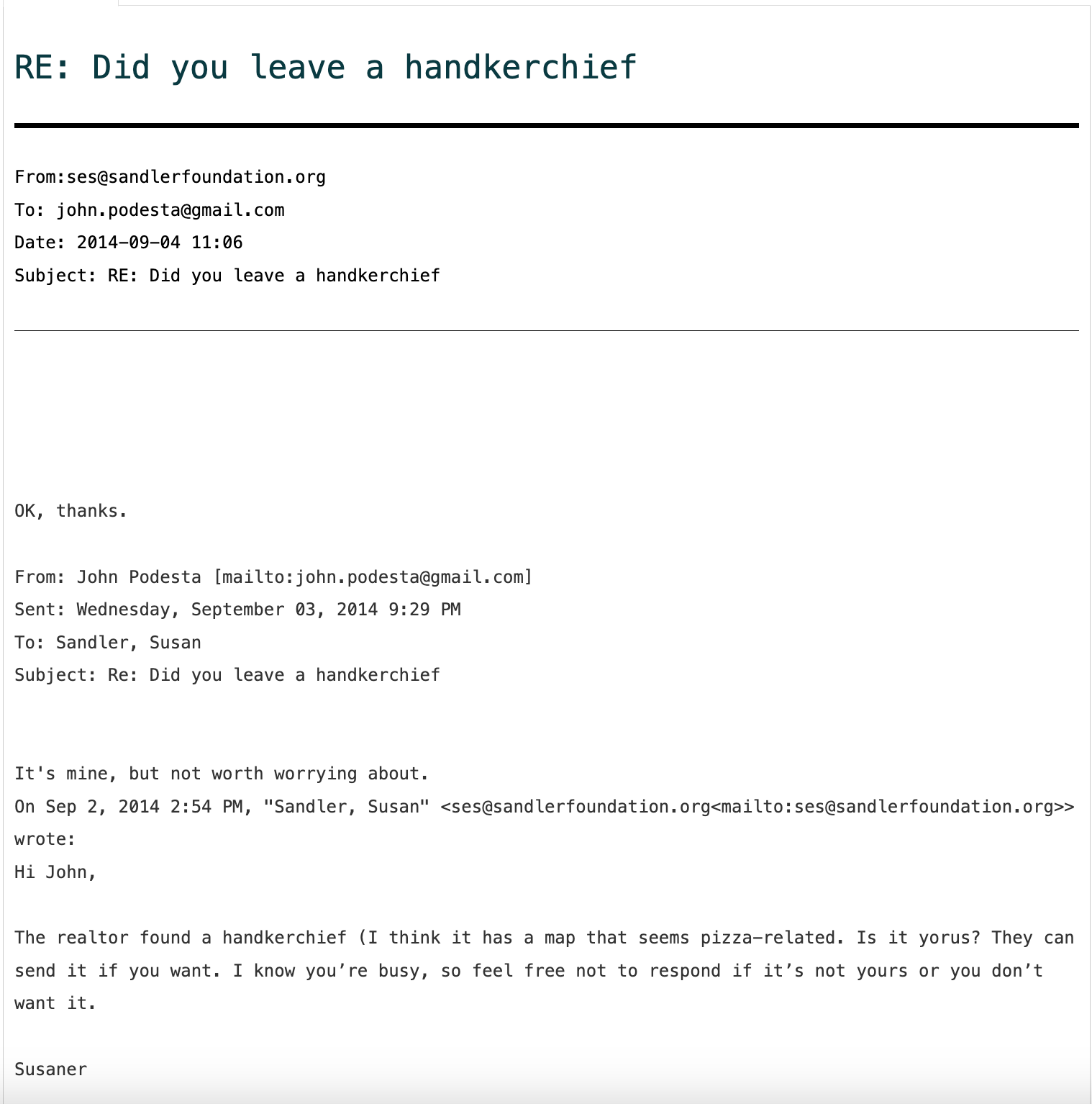
A typical reaction to something like that last one is, "Oh but that's just ONE email..."
And this perfectly illustrates the point here. There are hundreds of them. And the "normal folks" don't know.
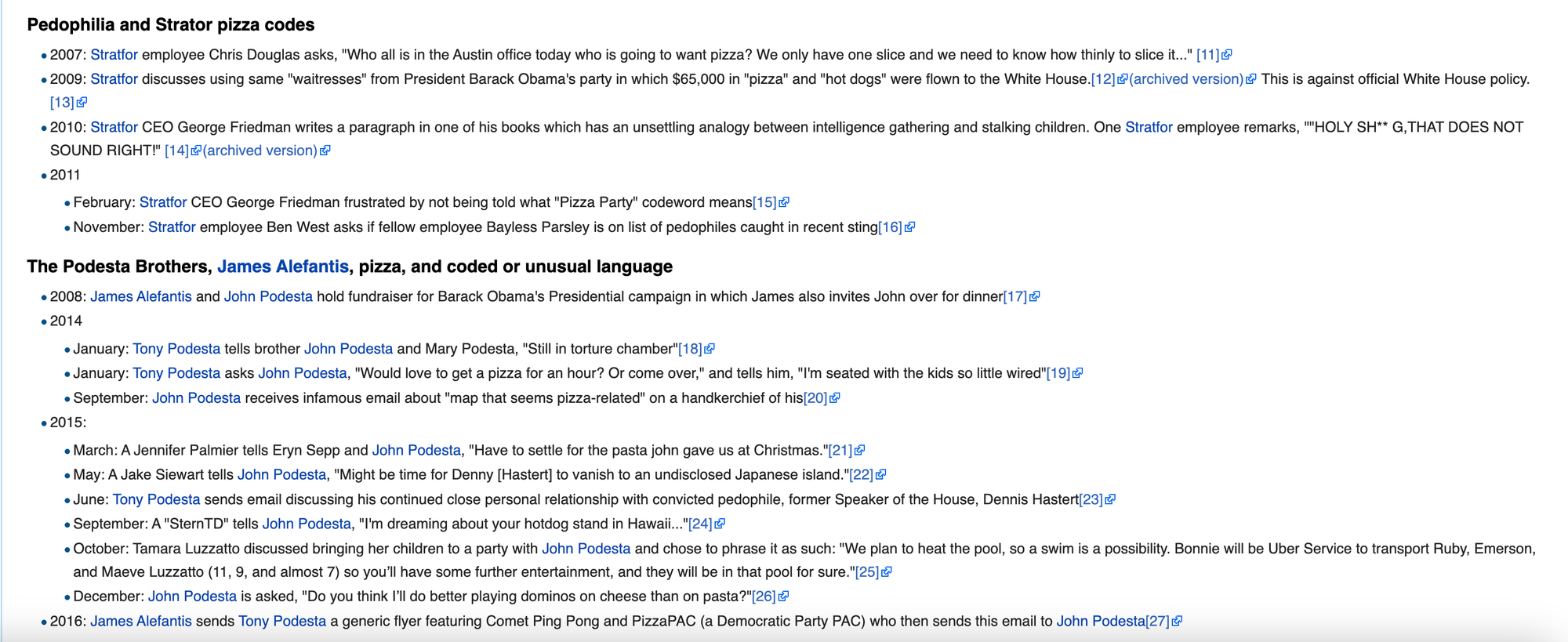
Dunning-Kruger in action.
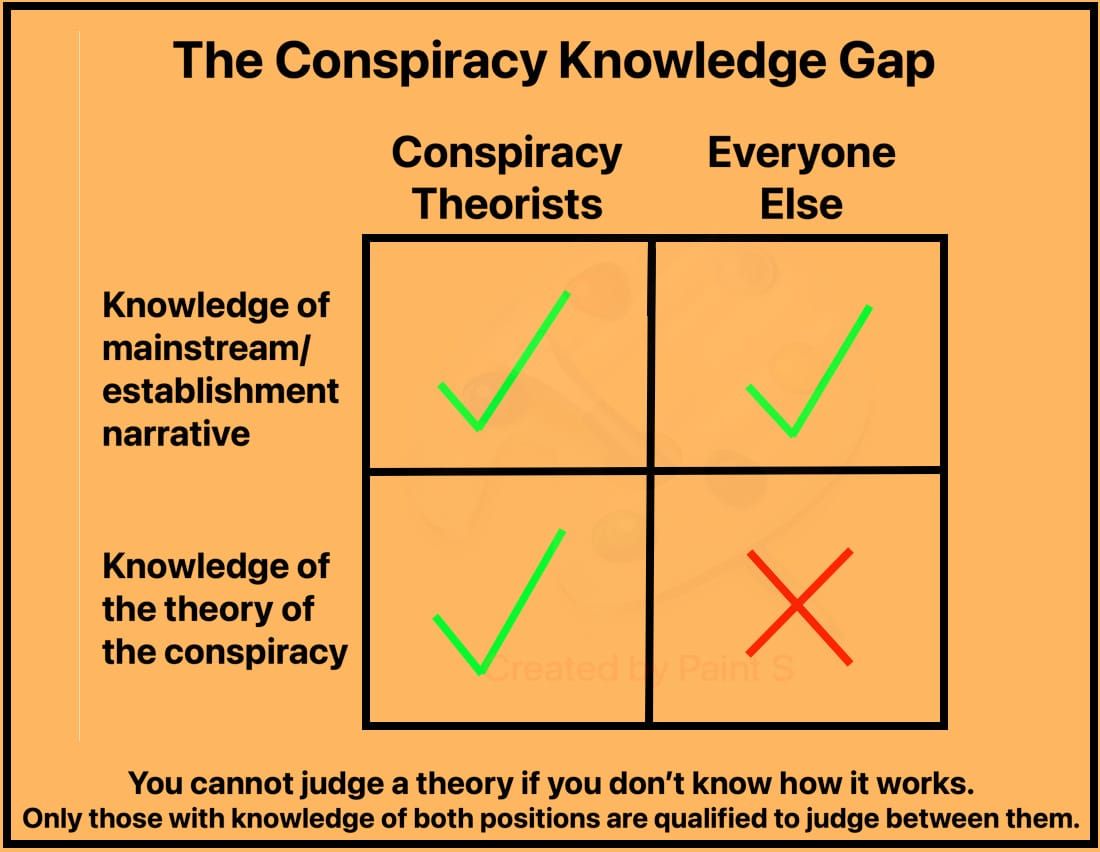
Look at the knowledge gap diagram.
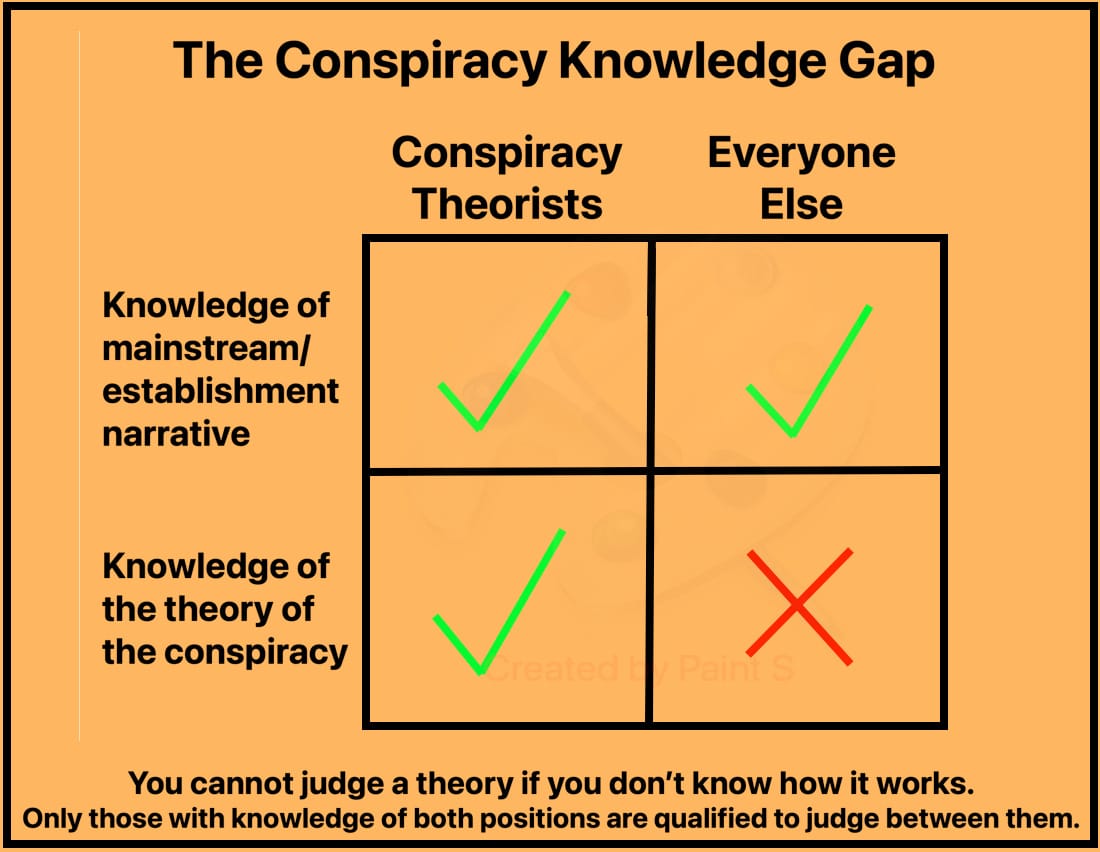
Dunning–Kruger, properly understood, isn’t “people who believe conspiracy theories.”
It’s people who confidently reject a theory they do not understand.
If you only know the mainstream narrative, you are not qualified to judge between the mainstream and the conspiracy explanation. You’re qualified to repeat what you’ve been told. That’s it.
The conspiracy theorist, for all his potential errors, usually:
- Knows the official story.
- Knows the alternative story.
- Knows where they clash.
- Knows which evidence supports which side.
He may still be wrong. But he is, at least, playing on the full board.
The mainstream believer who says, “I don’t need to read that; the experts already debunked it,” is doing Dunning–Kruger in real time:
- minimal knowledge, maximal confidence.
- zero engagement with the competing model, total certainty that it’s nonsense.
“But the experts…”
At this point people usually say, “Okay, but the experts have looked at the conspiracy theory, and they say it’s wrong. Isn’t it Dunning–Kruger to go against them?”
That’s where the Expertism cycle kicks in:
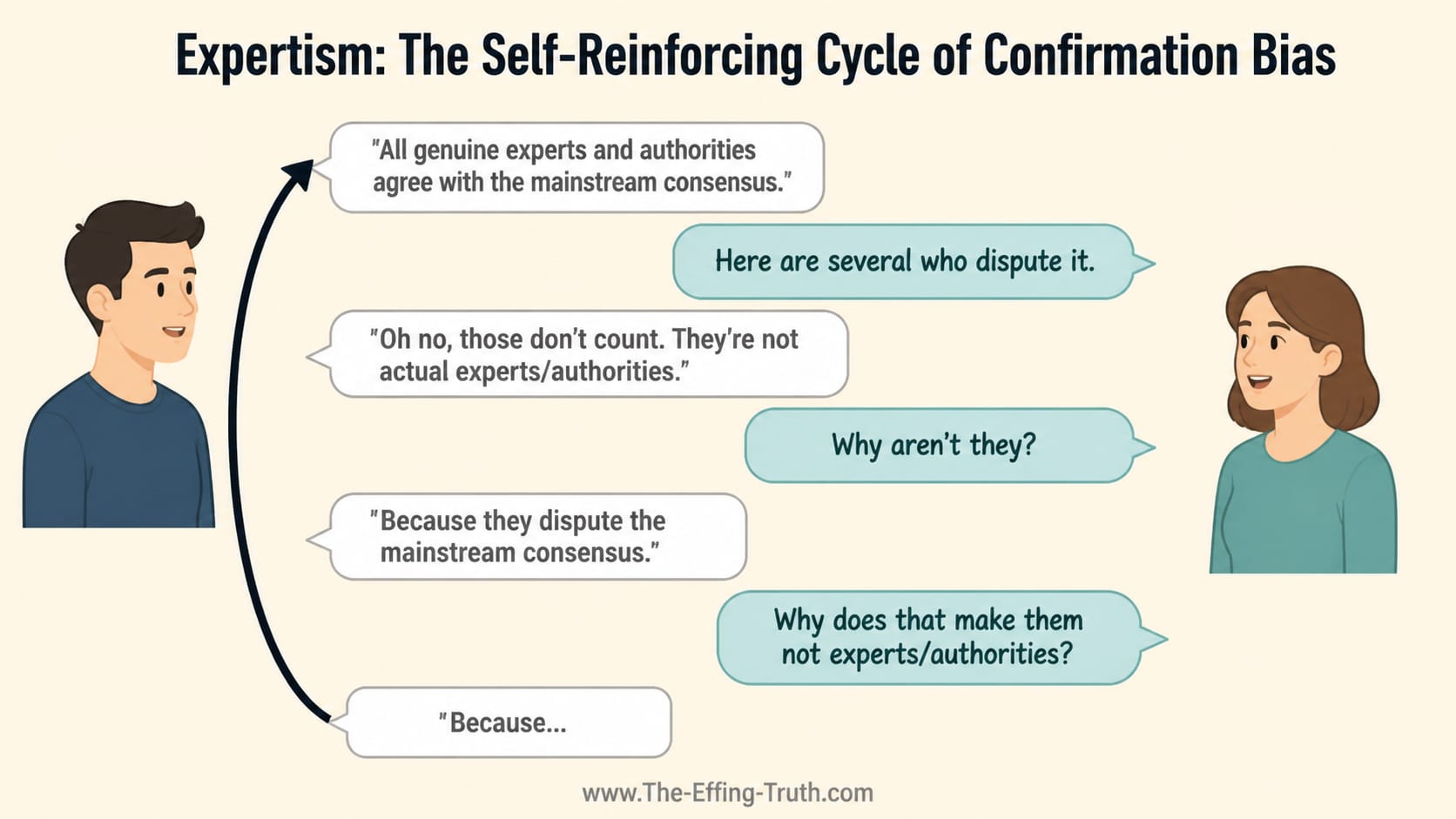
The mainstream game is:
- Define “real experts” as “whoever agrees with the mainstream consensus.”
- Exclude or smear any expert who doesn’t.
- Then point to the surviving consensus and say, “See? All the genuine experts are on our side.”
It’s circular.
Under that system, no dissenting expert can ever be allowed to count as an expert, by definition. So when a conspiracy theorist cites credentialed people who disagree, the mainstream reflex is: “Doesn’t count. Not a real expert.”
If you’re relying on a definition of “expert” that automatically excludes everyone who would argue for the conspiracy theory, then you are not actually appealing to expertise. You’re appealing to social conformity dressed as expertise.
That’s not an antidote to Dunning–Kruger. It’s an amplifier.
What real epistemic integrity looks like:
- You don’t judge a theory you don’t understand.
- You don’t dismiss a position whose best arguments you haven’t heard.
- You don’t call other people “ignorant” when they’ve studied more primary material than you have.
For more on what Epistemic Integrity is, I wrote a whole article on it:
Click here to read it.
If you want to avoid Dunning–Kruger on conspiracy topics, you have two honest options:
- Admit you don’t know.
- “I haven’t studied this enough to have a strong opinion.”
- That’s fine. That’s respectable.
- Learn both sides.
- Understand the mainstream narrative in detail.
- Then understand the conspiracy theory in detail.
- Only after that are you in a position to weigh them.
Until you’ve done that, you’re not “above” the conspiracy theorists. You’re just less informed than the people you’re mocking, and more confident than your knowledge justifies.
That’s Dunning–Kruger.
It doesn’t afflict the people who know both columns of the grid.
It afflicts the people who know one column, feel smart, and think that’s enough.